I Don’t Have Time For That

For a long time, I thought about contemplative practice, but never really committed to it.

“I don’t have time for that,” I told myself.

Then some time ago, I began to think about this differently by considering two things.

1) Life is short – like, wildly short – even in the best case scenarios.

And 2) if contemplative practice is how I am going to (slowly, day by day) begin to see people as they truly are, witness the sacramentality of life, not be reactive and ego-driven… if I am going to do any of this… I don’t have any time to lose.

Put a different way, from the perspective of my short lifespan, the “that” that I don’t have time for is putting off contemplative practice, the cultivation of solitude, the expansion of awareness.

That is what I don’t have time for. I don’t have time for avoidance.

Incentivizing Understanding

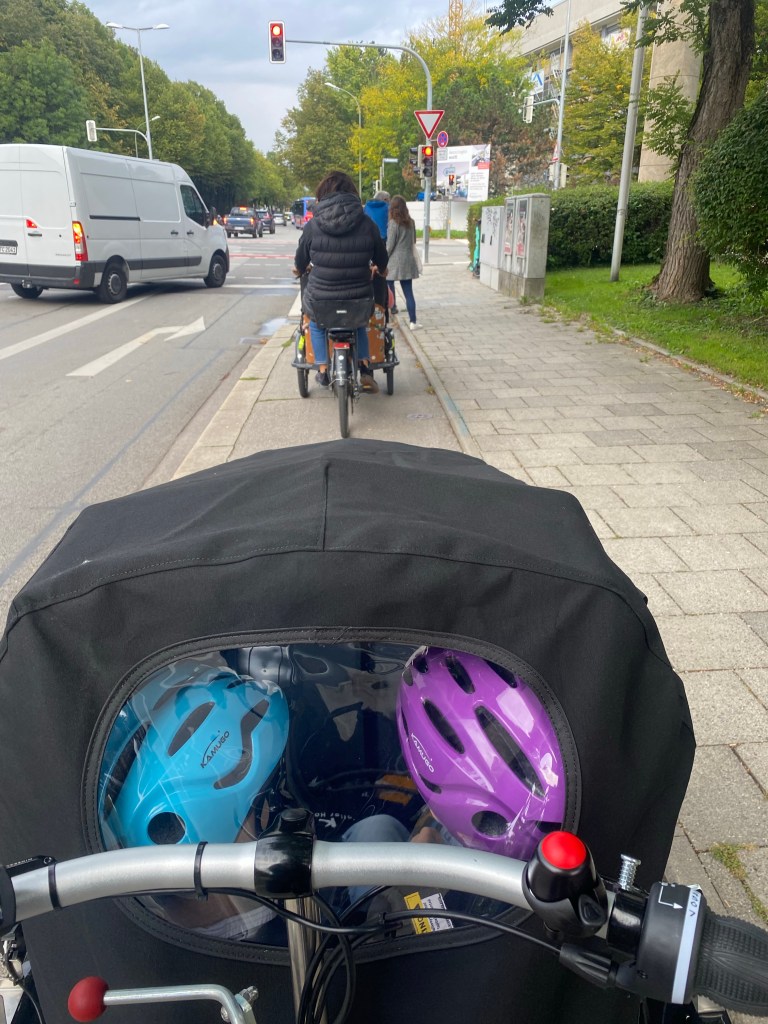
This is how my sons ride to school.

Usually they have a grand time, talking shop about school work, school friends, and what is likely to be for lunch.

And occasionally, as brothers do, they disagree with each other.  

The more trips they take in the bike, though, the less these misunderstandings turn into actual fighting.  The space incentivizes gentleness and understanding since, if they start a fight, they have to live with an angry brother for the remainder of the ride.  This vulnerability incentivizes the peaceful resolution of tension.

In public and private life, we, like these two brothers, will disagree with each other.  The modern world (fueled by the interwebs) gives us plenty of places to deal with this disagreement unproductively, to stoke our self-righteousness and circle the wagons on the moral high ground.

But what if, instead, we were to act like we were strapped into a modestly-sized cargo bike with our adversary?  What if we acted like our collective well-being depended on our ability to create structures that incentivize gentleness and understanding?  

My hunch is that is very well may.

PS – For more on this, check out Boston College’s free MOOC on the Synod on Synodality and Jon Haidt’s timely new Substack.

Cathedrals Under Construction

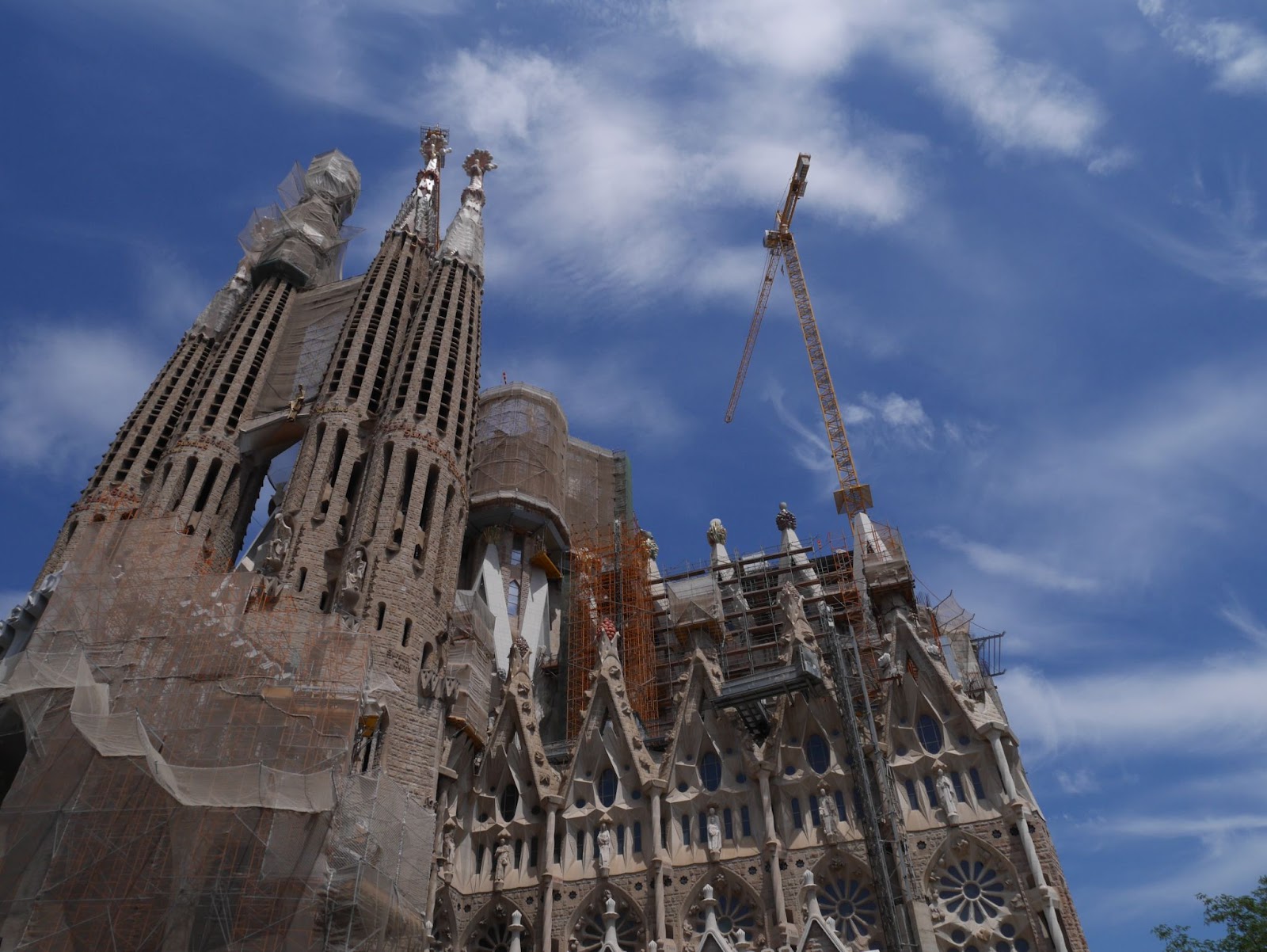
Some years ago, my wife and I spent the day in the Basílica de la Sagrada Familia, pictured below.

The original architect, Antoni Gaudí, hoped the basilica to be “the Bible, made of stone.” Of its uniqueness, one art critic said that “it is probably impossible to find a church building anything like it in the entire history of art.”

These superlative statements are entirely deserved.  Its beauty and layers of meaning were exhausting to take in. 

And what about the crane and scaffolding in the picture? Well, they are still completing construction of the building that was consecrated as a basilica in 2010.

Wait, what?  Unfinished and consecrated?

Yes, indeed!

And so I think it is with us.  

We are also cathedrals under construction – in need of grace and good company to help us to grow and already capable of the participating in the love that is God.  When we are able, with that same grace, to hold our cathedral-ness and our under-construction-ness together, we are capable of unique and remarkable beauty.

When “Both” Means “Neither”

When I was in elementary school, two of my very favorite events were scheduled for the same Saturday: A Cub Scout campout and a YMCA basketball team end-of-year party at Pizza Hut.

“Camping or Pizza Hut” is a tough choice indeed.

As my father is generous and fun-loving, he asked if I wanted to try to do both. 

Of course I did! Hooray!

So, on the fateful Saturday, we drove to the camp in the morning, set up the tent, hung out through the early afternoon, and then drove 90 minutes back into town for the party.  After I had collected my plastic trophy, we booked it back to our campsite.  By that time, though, most folks had headed to bed.

It was an exhausting day and it turned out that we were out of sync with both events.  We missed out on the camaraderie of the camping trip and we were definitely a little stinky for the party.

The lesson was not lost on us – that in choosing both we actually got to do neither – and has become a helpful conceptual hook in considering similarly tough choices.

When this sort of over-extension creeps into the schedule, we know that it is time to pick just one.

(Hey! This reminds me of a fun and formidable little book by Fr. Michael Rossmann, SJ – The Freedom of Missing Out!)

Bluey

Rare is media that can entrance and teach both adults and children. 

For books, the master is Mo Willems. For television, a show called Bluey sets the curve. I do not remember who turned us onto the program, but our family owes them big.

Though ostensibly for children, I am certain that this show, in its 7-minute episodes, makes me a better human being.

I fear to over explain it.  It is best to just to experience the genius. So, go beg someone’s Disney+ password and treat yourself tonight.  Especially brilliant episodes are: “Omelette”, “Dance Mode”, and “Hammerbarn”. 

The people who produce the show are masters – in illustrating the depth of the interior lives of children, in shepherding parents toward courageous light-heartedness, and helping us all see how wonderful it is to live on the earth and attend to simple things.

75%

Our sons wanted to practice some German songs that they were learning at school, so I found them on YouTube, set the playback speed at one click under full-speed (75%), and we all sang along.

It was (and is) great fun.

One time, though, when queueing up the songs, I forgot to set the speed at 75%, and the songs began at full speed.  Both of them immediately protested. 

Whoa! Why is everything going so fast! Turn it back to how it was!

“Normal,” it turns out, is way too accelerated.

And in our lives, too, it may be that we are going way too fast, but have only ever considered it to be normal.

What would a test run at 75% look like this week?

This, Too, Shall Pass

The strain of caring for a young person through a trying stage.

A disorienting heartache.

The pain of having let someone down.

This, too, shall pass.

And yet, do I truly want to wish it quickly away? If I do, I very well may miss the meaning of the experience. I may short-circuit the work it wants to achieve in me.

So, yes… this, too, shall pass… but before it does, I promise to be present with it.

As Broken and as Whole

I read (and then re-read and re-read) the following this week.

“The neurosis of our age is the fear of being all that we are. And in the fear of being all that we are, we pretend that we are less than we are. And in pretending that we are less than we are, we are anxious. And we are anxious because we are afraid that someone might pull the curtain back and we might be discovered and we might have to stand up and be what we are. We might have to stand up and in an open-faced, vulnerable way, acknowledge… just how broken and how whole… how fleeting and eternal, how human and divine we are.” -Jim Finley quoting Rollo May in Christian Meditation: Entering the Mind of Christ (around 5:24:00 in the audio version)

Whoa!

The point Finley was making is that in meditation practice, we are able to (very slowly and patiently) accept the totality of all that we are, and so live differently.

But I think we also need relationships for this level of acceptance. We need people who are able to see the broken, the fleeting, the human – and who love us anyway – and who help us hold it all gently. And we need people who can, at the same time, mirror back the wholeness, the eternal, the divine in us.

This is a profound gift to receive and to offer. Let’s try to do it more often.

People Like Us Do Things Like This

The other day, I saw a car and a bike heading toward each other on the same narrow-ish street. Then I saw the car slow down, pull over, and actually put two tires up on the curb to give the bike more space.

I see similar deference to bikes here routinely. It’s “how things are done around here.”

Sometimes, we are so immersed in the culture of a place or institution that we do not even name or acknowledge the reality of “how things are done.”

But when we slow down and observe (and/or listen to people who are not like us), we see this “how things are done” more clearly. Once we have seen it, we have the choice to consider if this kind of culture contributes to our common flourishing.

If it does not contribute to our flourishing, we can then choose to live and speak a different way.

There is a profound power in the reality of “people like us do things like this.”