With the earth. With each other. With God.
Better relationships are possible.
For strained relationships to heal, it takes dedicated time and the humility to ask for help.
on accompaniment, attentiveness, and contribution
With the earth. With each other. With God.
Better relationships are possible.
For strained relationships to heal, it takes dedicated time and the humility to ask for help.
Introspection seeks deeper understanding by turning inward, exploring our own thoughts, emotions, and motivations.
Outrospection seeks deeper understanding by turning outward, focusing on the experiences and perspectives of others, deepening empathy and connection.
We each need both, and probably gravitate to one or the other.
We may be well-served by practicing the one that does not come naturally.
Each of us longs for good leaders. People committed to the common good, rooted in wisdom and active love.
I’ve heard this hope expressed in the “prayers of the faithful” quite a bit recently.
What if, as an answer to this prayer, God is speaking you to the world as the leader that you long to see?
A moment of anger can be quite involuntary. Something happens, crashing against our expectations of how things should be, and all of a sudden, we are furious.
Okay. But then what happens.
Choosing to fan the fury leads to barricading oneself on a self-righteous patch of moral high ground. Not a fun or productive place to live. This approach keeps us from being able to listen and relate to people who think differently from us. And so, anger keeps us from seeing and responding effectively to the situation that made us angry in the first place.
If we find ourselves to be furious, we can afterwards choose to become curious.
In this situation where I feel stuck and stymied, what is in my power to change?
A deeply important question to ask, and one that can be tough to answer well.
I was recently shown this succinct (and fun!) 20 minute group exercise that helps each participant answer the question with clarity and power.
What is your 15%?
Do we love creation with the same love with which God loves creation?
That is a very high standard, an exquisite opportunity, and a grace for which we can pray daily.
When someone does something that really winds us up, what do we learn if we get curious and ask: “What’s behind the behavior?”
If the behavior is particularly perplexing, chances are there’s fear behind it.
When we realize this, and realize our own capacity for fear, it becomes easier to get close enough to love.
I saw this graphic this week. It achieves its purpose well.
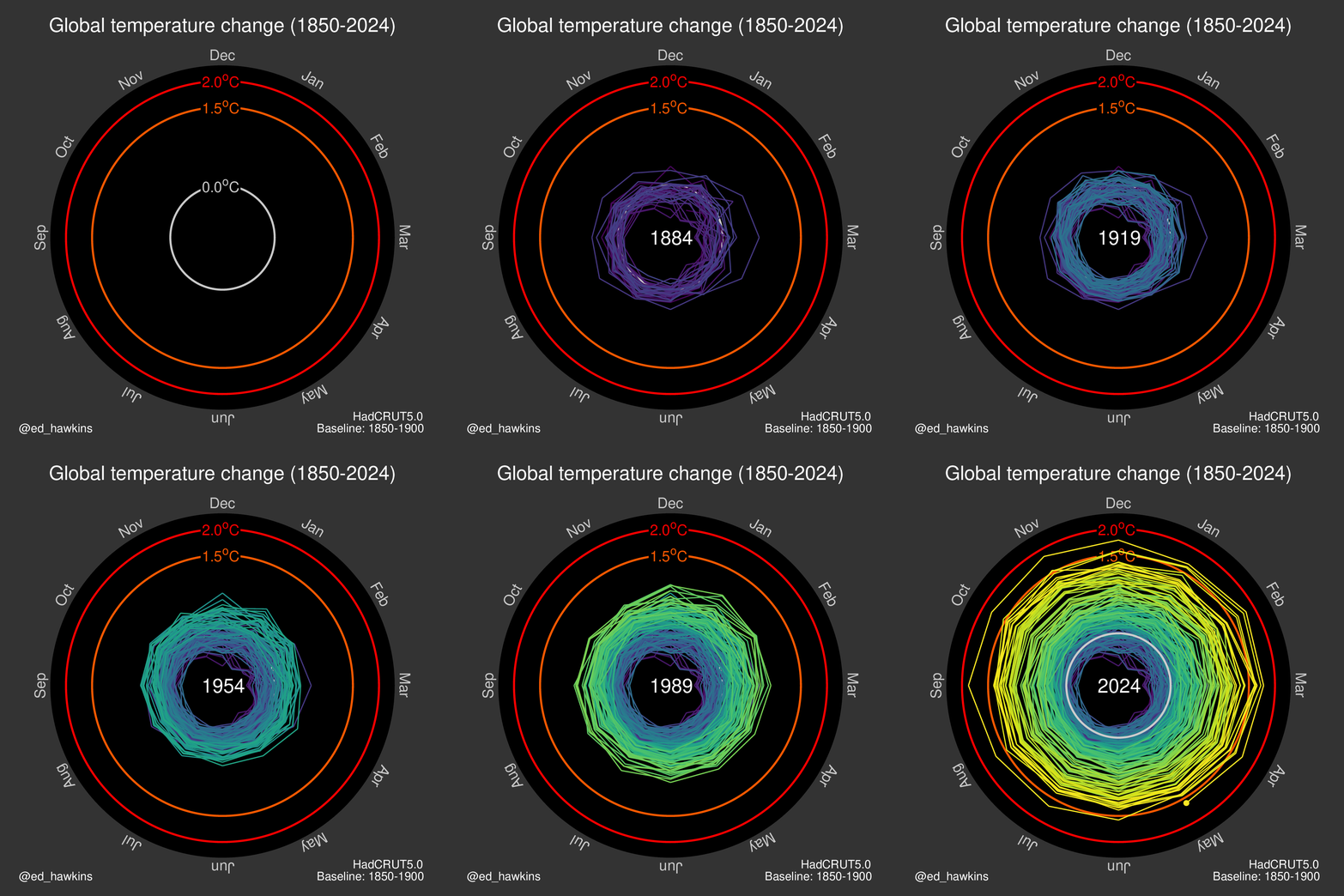
It’s not too late. What if we get it right?
(Here is the source for the graphic.)
Our sons love to run in a circuit through our apartment. As they do, the younger one loudly reports their movement from “maximum speed!” to “DOUBLE maximum speed” to “TRIPLE MAXIMUM SPEED!”
This is a harmless (so far!) game for them, but for most adults “triple maximum speed” is the uncritically accepted norm of life. We are too often stretched to breaking and do not consider that there is another way. When we do this, we miss the things of greatest value.
These are urgent times we live in… so, let us slow down.
The assembly for the Synod on Synodality opened yesterday. Let’s pray for the folks in the mix… pray for the grace to embody this outstanding passage by Henri Nouwen.
“Christian leaders cannot simply be persons who have well-informed opinions about the burning issues of our time. Their leadership must be rooted in the permanent, intimate relationship with the incarnate Word, Jesus, and they need to find there the source for their words, advice, and guidance. Through the discipline of contemplative prayer, Christian leaders have to learn to listen again and again to the voice of love and to find there the wisdom and courage to address whatever issue presents itself to them.
Dealing with burning issues without being rooted in a deep personal relationship with God easily leads to divisiveness because, before we know it, our sense of self is caught up in our opinion about a given subject. But when we are securely rooted in personal intimacy with the source of life, it will be possible to remain flexible without being relativistic, convinced without being rigid, willing to confront without being offensive, gentle and forgiving without being soft, and true witnesses without being manipulative.
For Christian leadership to be truly fruitful in the future, a movement from the moral to the mystical is required.”
(In the Name of Jesus, Page 45-46)

 Paul's Blog