The Tree Stand

I’ve been hiking these days in the forests and farmland around Munich. At the edge of many patches of forest sits a a wooden treestand, like this.
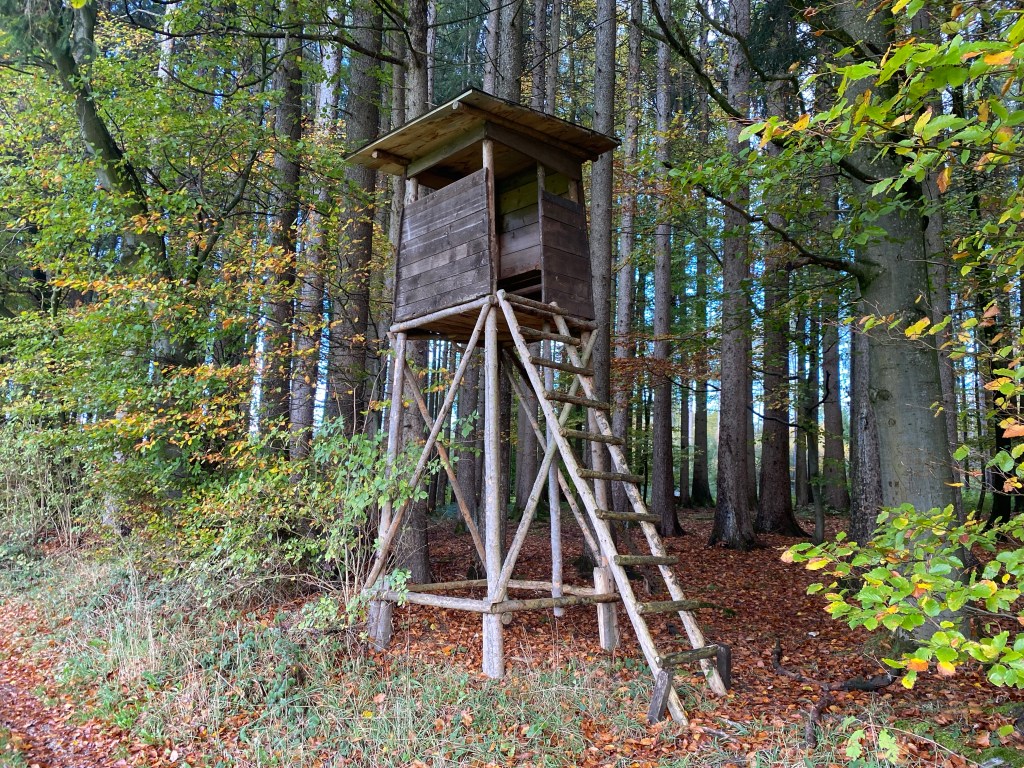
It is made for hunting. Climb the latter with your gear and wait, silently, for whatever might wander by.  

This is what meditation is like, I think, except the point is that there is neither weapon nor aggression. Only two tools are needed: (1) the willingness to behold whatever comes and to let it move along, and (2) the dedication to climb into the treestand day after day.

And there are many treestands available at the treeline. We can all do this.
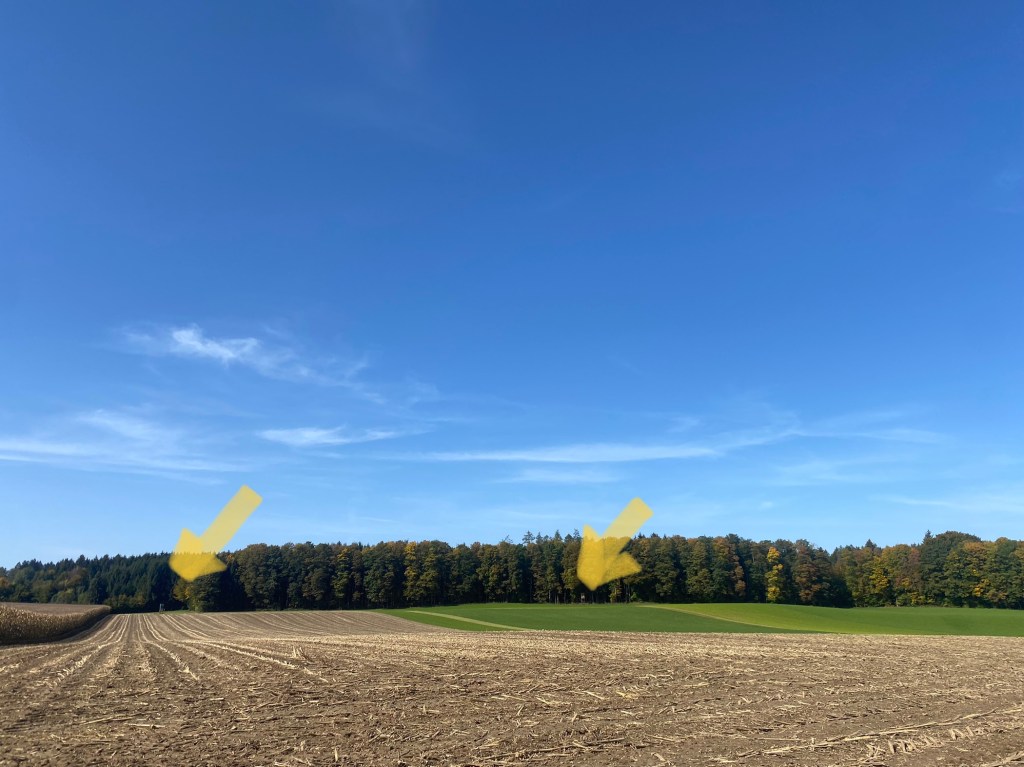
Two tree stands at the tree line

We can each care for our solitude in this way. When we do, and do so consistently, we are (more) emptied to receive the love woven into our life.

Absorb Every Feeling? Integrate Every Thought?

Probably not the best idea.

Here is a quote I think about a great deal that gives a hypothesis about why:

“…[T]he mind is divided into parts that sometimes conflict, like a small rider sitting on top of a large elephant. The rider represents conscious or controlled processes, the language-based thinking that fills our conscious minds and that we can control to some degree. 

The elephant represents everything else that goes on in our minds, the vast majority of which is outside of our conscious awareness. These processes can be called intuitive, unconscious, or automatic, referring to the fact that nearly all of what goes on in our minds is outside of our direct control… 

The rider and elephant metaphor captures the fact that the rider often believes he is in control, yet the elephant is vastly stronger and tends to win any conflict that arises between the two.

…[T]he rider generally functions more like the elephant’s servant than its master in that the rider is extremely skilled at producing post hoc justifications for whatever the elephant does or believes. Emotional reasoning is the cognitive distortion that occurs whenever the rider interprets what is happening in ways that are consistent with the elephant’s reactive emotional state without investigating what is true.

The rider then acts like a lawyer or press secretary whose job is to rationalize and justify the elephants preordained conclusions rather than to inquire into or even be curious about what is really true.”

The Coddling of the American Mind, Chapter 2, emphasis added

So. Shall we absorb every feeling and integrate every thought?

Far better to cultivate the ability to “note” our thoughts and feelings and grow the prudence to hold onto only what is helpful.

The Utility of Feeling Dumb

We recently moved to Germany and, upon moving, I found myself to be incompetent at basic tasks.

Examples. I made several mistakes in the disposal of our garbage. (The system is fairly intense here!) I did not know how to go about finding a doctor. I am not sure what many of the street signs mean. I can struggle to find basic things at the grocery store. I still miss the subtlety in most communication.

All of this habituates me to the experience of feeling, well, kind of dumb! I can welcome it, though, as an opportunity rather than react neurotically against the feeling, as is typically my default.

And what is the opportunity? The experience of incompetence helps me to embrace the need to attend to the stuff of my life as always fresh and new. This is the habit I need in order to see the wonder of who my loved ones are becoming.

Non-Maximization

The principles of Catholic Social Teaching get repeated quite a bit. Human dignity, common good, solidarity, etc. The list usually has seven.

A colleague shared a similar list with me the other day that had eight, and the eighth has had me thinking.

It was the principle of non-maximization, asking us to intentionally leave time unscheduled, land untilled, opportunities on the table. 

Pause for a second to consider how wild (and difficult!) that is for us.

I recently read that St. Francis of Assisi organized that part of their community land was to be left uncultivated so that all could see all what grew there (wildflowers and such), beauty that sprang up without their work.

When we see the wildflowers, it undermines the lie that we are in control as well as the compulsion to be in control.  It leads to a more abundant life.

And where did we get indoctrinated with the opposite (the principle of maximization) anyway?