Finding and protecting time for meditation, prayer, and the cultivation of solitude is serious business.
It is quite likely the best way* to begin to take ourselves and our stories less seriously.
*okay – maybe it is tied with raising children.
on accompaniment, attentiveness, and contribution
Finding and protecting time for meditation, prayer, and the cultivation of solitude is serious business.
It is quite likely the best way* to begin to take ourselves and our stories less seriously.
*okay – maybe it is tied with raising children.
A few weeks ago, I wrote about how the daily emails I read went from two to three (when I signed up for The Daily Difference, a source of reliable and easily understandable knowledge on climate change.)
A few people asked me about the other two. Here they are!
The Daily Meditations from the Center for Action and Contemplation: Most of the meditations are adapted from the writings of Fr. Richard Rohr, OFM. They translate the depth and challenge of the Christian tradition in a way that is consistently inviting.
Seth Godin’s daily blog: Godin riffs on marketing, empathy, being a human today, and the endurance needed to make a difference.
Most days, I marvel that they give all of this away for free.
Our sons wanted to practice some German songs that they were learning at school, so I found them on YouTube, set the playback speed at one click under full-speed (75%), and we all sang along.
It was (and is) great fun.
One time, though, when queueing up the songs, I forgot to set the speed at 75%, and the songs began at full speed. Both of them immediately protested.
Whoa! Why is everything going so fast! Turn it back to how it was!
“Normal,” it turns out, is way too accelerated.
And in our lives, too, it may be that we are going way too fast, but have only ever considered it to be normal.
What would a test run at 75% look like this week?
The strain of caring for a young person through a trying stage.
A disorienting heartache.
The pain of having let someone down.
This, too, shall pass.
And yet, do I truly want to wish it quickly away? If I do, I very well may miss the meaning of the experience. I may short-circuit the work it wants to achieve in me.
So, yes… this, too, shall pass… but before it does, I promise to be present with it.
I hope that you, some day, run into The Monsters’ Monster, a witty, subtle tale about the power of gratitude.
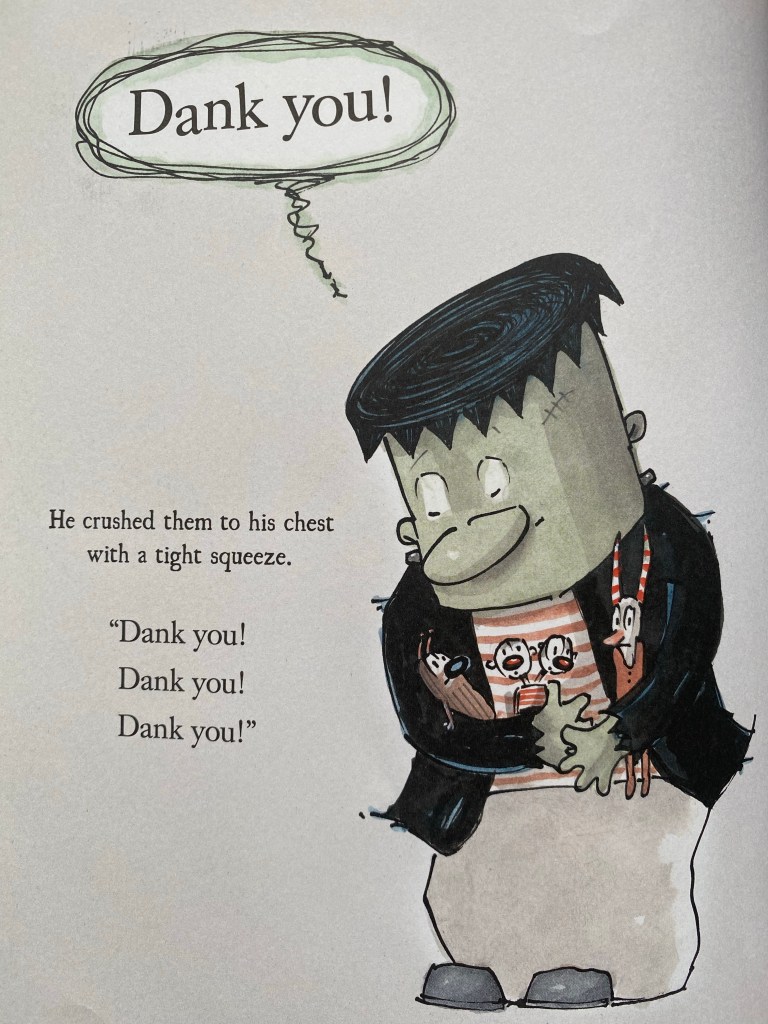
Let’s all, like the Monster, say “dank you” a bit more.
ps – Happy Thanksgiving, all.
pps- And Katie and I are grateful to Fr. James Martin for this post about The Examen Book. Thank you, Jim!

I read (and then re-read and re-read) the following this week.
“The neurosis of our age is the fear of being all that we are. And in the fear of being all that we are, we pretend that we are less than we are. And in pretending that we are less than we are, we are anxious. And we are anxious because we are afraid that someone might pull the curtain back and we might be discovered and we might have to stand up and be what we are. We might have to stand up and in an open-faced, vulnerable way, acknowledge… just how broken and how whole… how fleeting and eternal, how human and divine we are.” -Jim Finley quoting Rollo May in Christian Meditation: Entering the Mind of Christ (around 5:24:00 in the audio version)
Whoa!
The point Finley was making is that in meditation practice, we are able to (very slowly and patiently) accept the totality of all that we are, and so live differently.
But I think we also need relationships for this level of acceptance. We need people who are able to see the broken, the fleeting, the human – and who love us anyway – and who help us hold it all gently. And we need people who can, at the same time, mirror back the wholeness, the eternal, the divine in us.
This is a profound gift to receive and to offer. Let’s try to do it more often.
The other day, I saw a car and a bike heading toward each other on the same narrow-ish street. Then I saw the car slow down, pull over, and actually put two tires up on the curb to give the bike more space.
I see similar deference to bikes here routinely. It’s “how things are done around here.”
Sometimes, we are so immersed in the culture of a place or institution that we do not even name or acknowledge the reality of “how things are done.”
But when we slow down and observe (and/or listen to people who are not like us), we see this “how things are done” more clearly. Once we have seen it, we have the choice to consider if this kind of culture contributes to our common flourishing.
If it does not contribute to our flourishing, we can then choose to live and speak a different way.
There is a profound power in the reality of “people like us do things like this.”
The shelves of our sons’ Montessori classroom are lined with work activities. Many of these activities have multiple “presentations,” ways to engage the work at a deeper and deeper level. (They once reported that one work had eight presentations.) They feel energized and fascinated by the unfolding complexity and richness of the work.
The child would likely not know how to access this depth of experience if there is not a guide to accompany them and a community of practice with which to engage.
I think the church, at its best, is characterized by this kind of interaction, that we might learn the next presentation of the complexity and richness of the sacramentality of our world.
I’ve been hiking these days in the forests and farmland around Munich. At the edge of many patches of forest sits a a wooden treestand, like this.
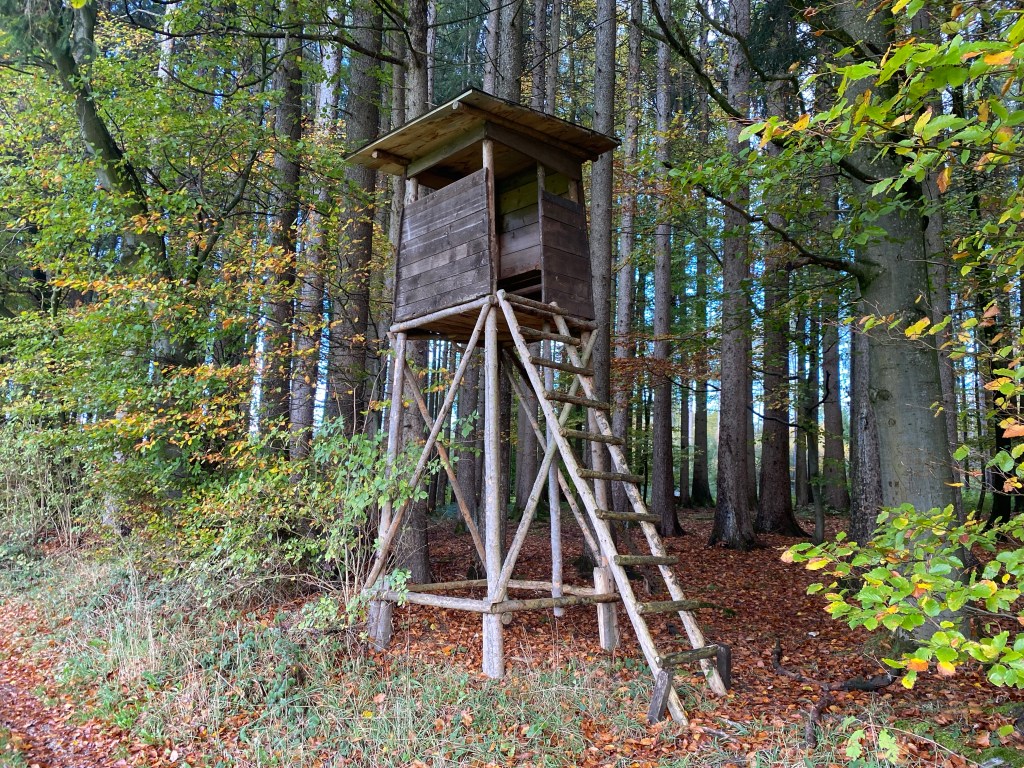
It is made for hunting. Climb the latter with your gear and wait, silently, for whatever might wander by.
This is what meditation is like, I think, except the point is that there is neither weapon nor aggression. Only two tools are needed: (1) the willingness to behold whatever comes and to let it move along, and (2) the dedication to climb into the treestand day after day.
And there are many treestands available at the treeline. We can all do this.
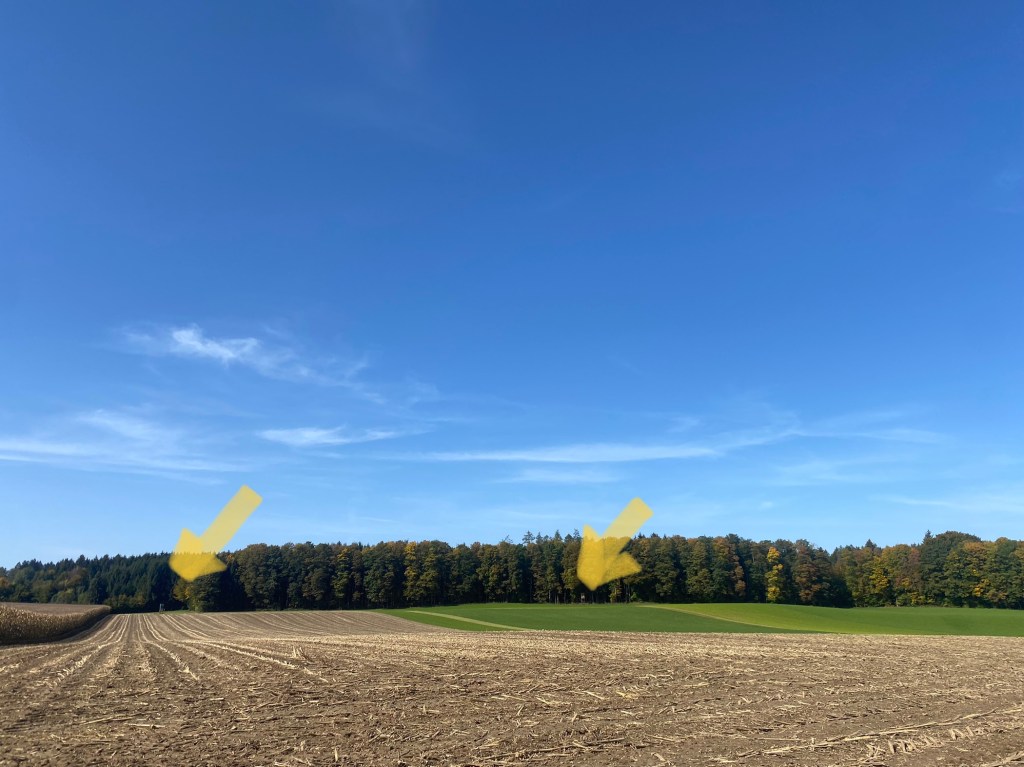
We can each care for our solitude in this way. When we do, and do so consistently, we are (more) emptied to receive the love woven into our life.
Probably not the best idea.
Here is a quote I think about a great deal that gives a hypothesis about why:
“…[T]he mind is divided into parts that sometimes conflict, like a small rider sitting on top of a large elephant. The rider represents conscious or controlled processes, the language-based thinking that fills our conscious minds and that we can control to some degree.
The elephant represents everything else that goes on in our minds, the vast majority of which is outside of our conscious awareness. These processes can be called intuitive, unconscious, or automatic, referring to the fact that nearly all of what goes on in our minds is outside of our direct control…
The rider and elephant metaphor captures the fact that the rider often believes he is in control, yet the elephant is vastly stronger and tends to win any conflict that arises between the two.
…[T]he rider generally functions more like the elephant’s servant than its master in that the rider is extremely skilled at producing post hoc justifications for whatever the elephant does or believes. Emotional reasoning is the cognitive distortion that occurs whenever the rider interprets what is happening in ways that are consistent with the elephant’s reactive emotional state without investigating what is true.
The rider then acts like a lawyer or press secretary whose job is to rationalize and justify the elephants preordained conclusions rather than to inquire into or even be curious about what is really true.”
The Coddling of the American Mind, Chapter 2, emphasis added
So. Shall we absorb every feeling and integrate every thought?
Far better to cultivate the ability to “note” our thoughts and feelings and grow the prudence to hold onto only what is helpful.
Have a WordPress.com account? Log in now.

