75%

Our sons wanted to practice some German songs that they were learning at school, so I found them on YouTube, set the playback speed at one click under full-speed (75%), and we all sang along.

It was (and is) great fun.

One time, though, when queueing up the songs, I forgot to set the speed at 75%, and the songs began at full speed.  Both of them immediately protested. 

Whoa! Why is everything going so fast! Turn it back to how it was!

“Normal,” it turns out, is way too accelerated.

And in our lives, too, it may be that we are going way too fast, but have only ever considered it to be normal.

What would a test run at 75% look like this week?

This, Too, Shall Pass

The strain of caring for a young person through a trying stage.

A disorienting heartache.

The pain of having let someone down.

This, too, shall pass.

And yet, do I truly want to wish it quickly away? If I do, I very well may miss the meaning of the experience. I may short-circuit the work it wants to achieve in me.

So, yes… this, too, shall pass… but before it does, I promise to be present with it.

And No One Was Thinking About Being a Monster

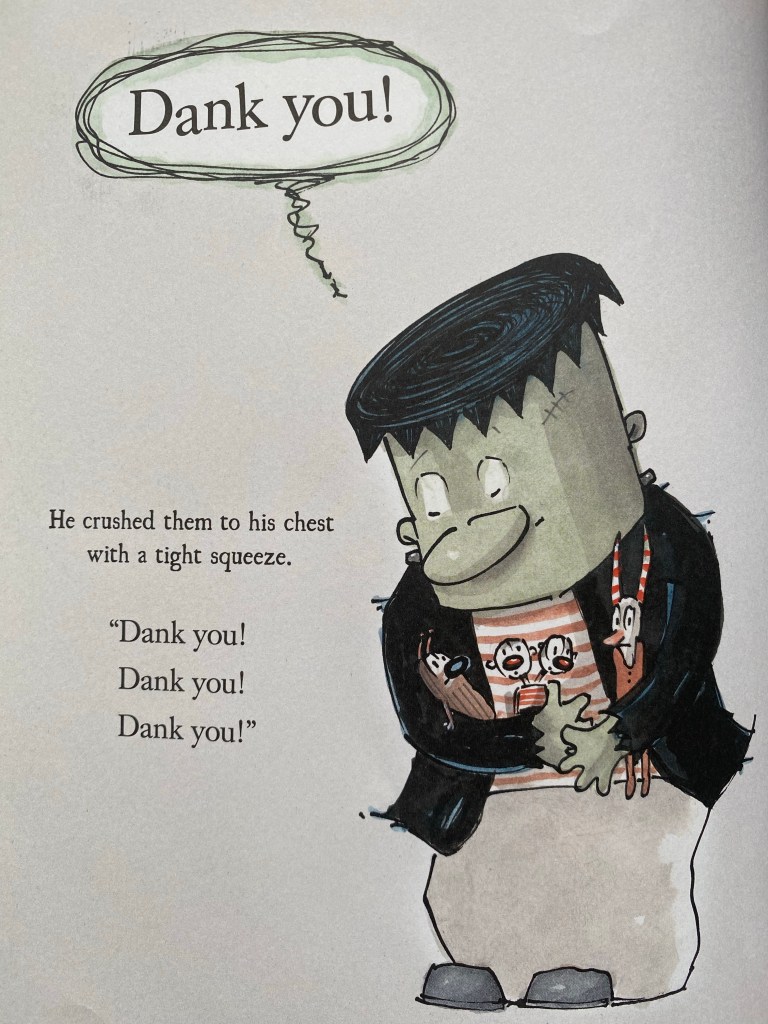
I hope that you, some day, run into The Monsters’ Monster, a witty, subtle tale about the power of gratitude.

Let’s all, like the Monster, say “dank you” a bit more.

ps – Happy Thanksgiving, all.

pps- And Katie and I are grateful to Fr. James Martin for this post about The Examen Book.  Thank you, Jim!

The Tree Stand

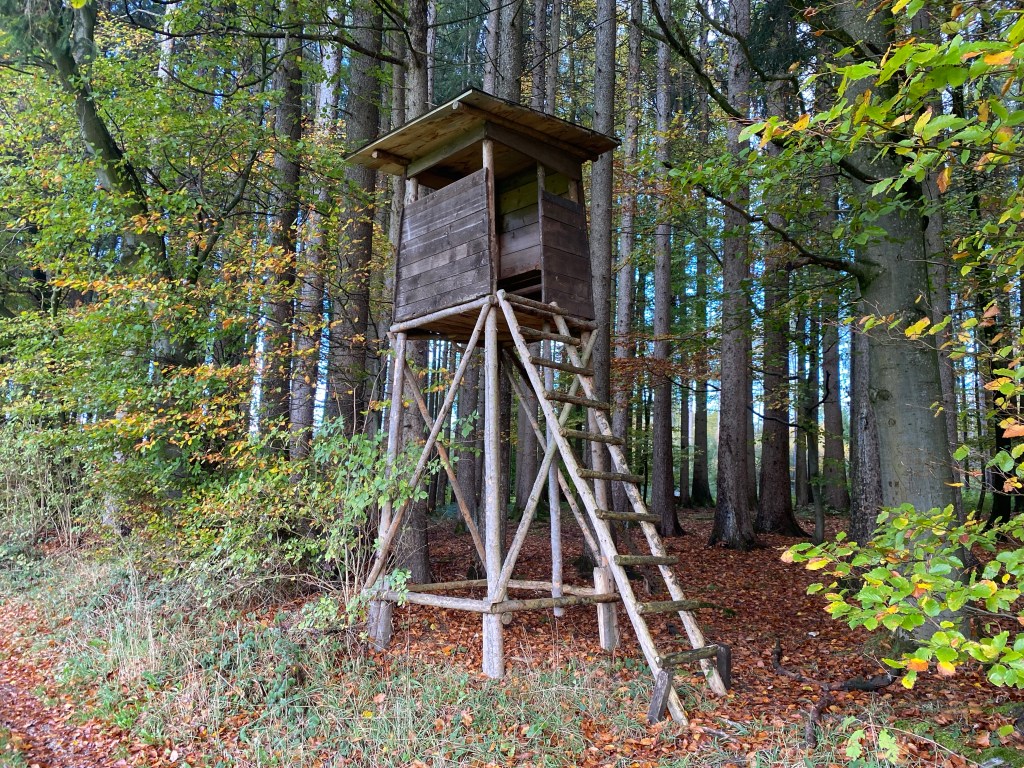
I’ve been hiking these days in the forests and farmland around Munich. At the edge of many patches of forest sits a a wooden treestand, like this.

It is made for hunting. Climb the latter with your gear and wait, silently, for whatever might wander by.  

This is what meditation is like, I think, except the point is that there is neither weapon nor aggression. Only two tools are needed: (1) the willingness to behold whatever comes and to let it move along, and (2) the dedication to climb into the treestand day after day.

And there are many treestands available at the treeline. We can all do this.

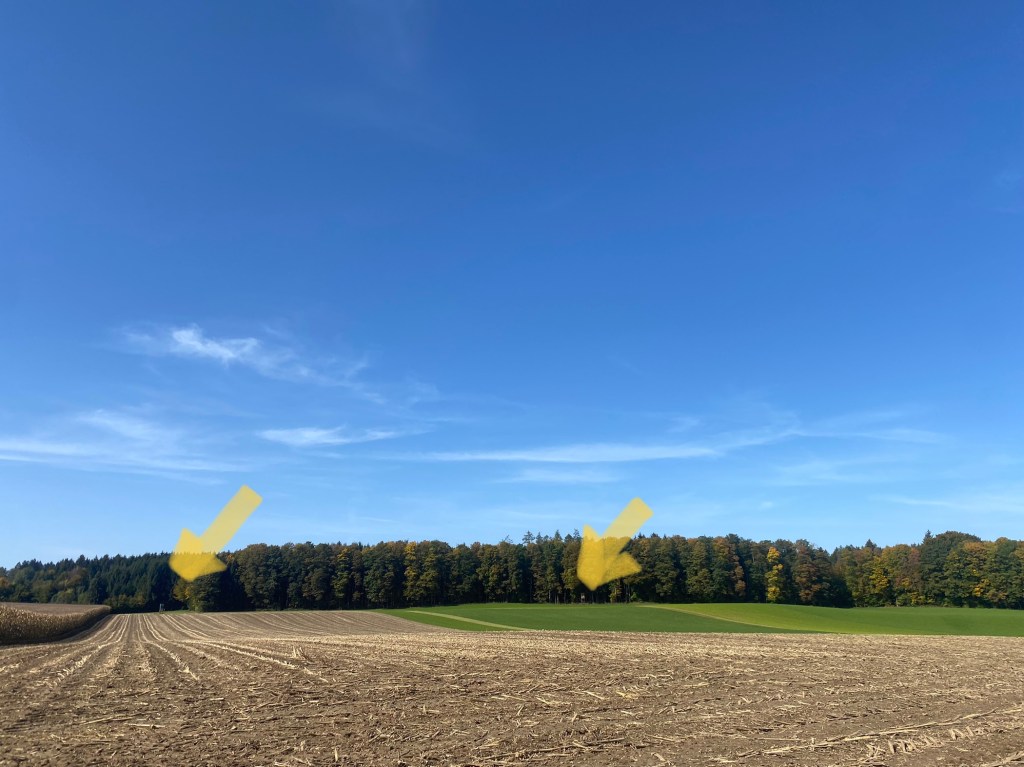
Two tree stands at the tree line

We can each care for our solitude in this way. When we do, and do so consistently, we are (more) emptied to receive the love woven into our life.

Absorb Every Feeling? Integrate Every Thought?

Probably not the best idea.

Here is a quote I think about a great deal that gives a hypothesis about why:

“…[T]he mind is divided into parts that sometimes conflict, like a small rider sitting on top of a large elephant. The rider represents conscious or controlled processes, the language-based thinking that fills our conscious minds and that we can control to some degree. 

The elephant represents everything else that goes on in our minds, the vast majority of which is outside of our conscious awareness. These processes can be called intuitive, unconscious, or automatic, referring to the fact that nearly all of what goes on in our minds is outside of our direct control… 

The rider and elephant metaphor captures the fact that the rider often believes he is in control, yet the elephant is vastly stronger and tends to win any conflict that arises between the two.

…[T]he rider generally functions more like the elephant’s servant than its master in that the rider is extremely skilled at producing post hoc justifications for whatever the elephant does or believes. Emotional reasoning is the cognitive distortion that occurs whenever the rider interprets what is happening in ways that are consistent with the elephant’s reactive emotional state without investigating what is true.

The rider then acts like a lawyer or press secretary whose job is to rationalize and justify the elephants preordained conclusions rather than to inquire into or even be curious about what is really true.”

The Coddling of the American Mind, Chapter 2, emphasis added

So. Shall we absorb every feeling and integrate every thought?

Far better to cultivate the ability to “note” our thoughts and feelings and grow the prudence to hold onto only what is helpful.

The Utility of Feeling Dumb

We recently moved to Germany and, upon moving, I found myself to be incompetent at basic tasks.

Examples. I made several mistakes in the disposal of our garbage. (The system is fairly intense here!) I did not know how to go about finding a doctor. I am not sure what many of the street signs mean. I can struggle to find basic things at the grocery store. I still miss the subtlety in most communication.

All of this habituates me to the experience of feeling, well, kind of dumb! I can welcome it, though, as an opportunity rather than react neurotically against the feeling, as is typically my default.

And what is the opportunity? The experience of incompetence helps me to embrace the need to attend to the stuff of my life as always fresh and new. This is the habit I need in order to see the wonder of who my loved ones are becoming.

Non-Maximization

The principles of Catholic Social Teaching get repeated quite a bit. Human dignity, common good, solidarity, etc. The list usually has seven.

A colleague shared a similar list with me the other day that had eight, and the eighth has had me thinking.

It was the principle of non-maximization, asking us to intentionally leave time unscheduled, land untilled, opportunities on the table. 

Pause for a second to consider how wild (and difficult!) that is for us.

I recently read that St. Francis of Assisi organized that part of their community land was to be left uncultivated so that all could see all what grew there (wildflowers and such), beauty that sprang up without their work.

When we see the wildflowers, it undermines the lie that we are in control as well as the compulsion to be in control.  It leads to a more abundant life.

And where did we get indoctrinated with the opposite (the principle of maximization) anyway?

Celebration or Competition?

Is our life in the church meant to be a celebration or a competition?  

Well, what do the Gospels say?  Fifteen times is the gathering of the Body of Christ described as a feast, banquet, or the like.  Only once (Matthew 25 – “When did I see you hungry, naked, in prison…”) is a scene of judgment described.  (And that one scene is important.  How we treat the poor and marginalized matters.)

I think, too often though, we do not share this vision of celebration given by the Gospels.  There is sense of competition, an unspoken understanding that we can win or be better than another at a life of faith.  The narrative of competition can be implicit and subtle and exists in both progressive and more traditional tribes of the church.  (The irony is, those who are most developed in faith know acutely that they are not better than anyone else.)

Certainly, life is not a celebration all the time, nor is it meant to feel that way.  There is work, sometimes very difficult work, to be done to be ever more hospitable at the celebration.  

But we do not do this work to win.  We do the work because we have been loved first… and then we celebrate.

Leaking

Our son was home sick from school this week, so (over Legos and audiobooks) he got to see me running around, trying to do too many things, and stressed out about work.

At one point in the morning, he asked me, “Papa – are you mad at me?”

Oof.  It hurts to hear this.  And I honestly wasn’t.  He was occupying himself brilliantly.  So what was going on?

I think that my face and my tone were leaking stress and tension.

My eyes can’t see my face (not without a mirror) and so I cannot tell when my face shows strain.  And the part of our brains (the superior temporal sulcus) that reads emotion in tone of voice actually switches off when we ourselves are speaking. (More about this in chapter 4 of this brilliant book.)  So, I leak emotion all the time, and I am blind to the emotion I leak.  Yikes!

For me, the next question is: Will I get curious about what I am leaking?  That is, will I slow down and acknowledge what I am feeling?

And then another: Who can help me see what I am blind to?  For honest answers, perhaps best to start with a child.  

Worst Spiritual Director

Imagine if a spiritual director were to do the following:

-Convince the directee to continually steal time from their contemplative practice, and even subtly doubt the worth of such a practice at all.

-Fan the flames of dead-end, obsessive thought.

-Rationalize habits that are not life-giving.

-Cast doubt on one’s ability to find and follow their vocation.

-Cast doubt on one’s basic goodness or the fact that one is loved.

It is laughable to even imagine, right? We would not put up with such talk even for a short time from a spiritual director.

We do, too often though, put up with such talk from our mind’s inner chatter.  

Put another way: It is possible that, sometimes, we may be our own worst spiritual director.

Of course, it does not have to be that way.  Simply seeing such chatter drains it of its power, and then we can ask for the grace to act like a fine spiritual director… one who can self-empty, see compassionately, and gently welcome the directee into the graced mystery of their life.